

No one knows exactly what a production environment will look like in ten years’ time. Technology is evolving rapidly, international competitors are setting new standards, and customers expect ever greater flexibility. Even so, manufacturing companies can prepare. Not by keeping up with every new technology, but by making choices that will leave sufficient room for manoeuvre in the future.
In other words, the factory of tomorrow has no fixed, final form. It must be able to adapt without losing direction. Five elements should reinforce one another: competitive edge, the operational foundation, data, organisation, and collaboration within the value chain.
1. Build on what sets your business apart
Productivity gains don’t automatically strengthen a company’s competitive position. Investing in higher volumes is of little value if customers opt for bespoke solutions, rapid engineering, or short lead times. Extensive standardisation may increase efficiency, but at the same time limit the desired flexibility.
Forward-looking investment therefore starts with a clear choice: how does the company want to stand out tomorrow? Through consistent quality, rapid product introduction, cost-effective customisation, reliable delivery, or technical expertise that competitors find hard to match?
Once that priority is clear, technology takes on a specific role:
- Automation can make recurring steps more efficient without limiting the scope for customisation
- Digital support makes specialist knowledge more widely available
- Better planning can help maintain delivery reliability as variation increases
As a result, a company assesses investments not on their technological appeal, but on the extent to which they support its chosen strategic focus.
2. Boost your productivity without losing agility
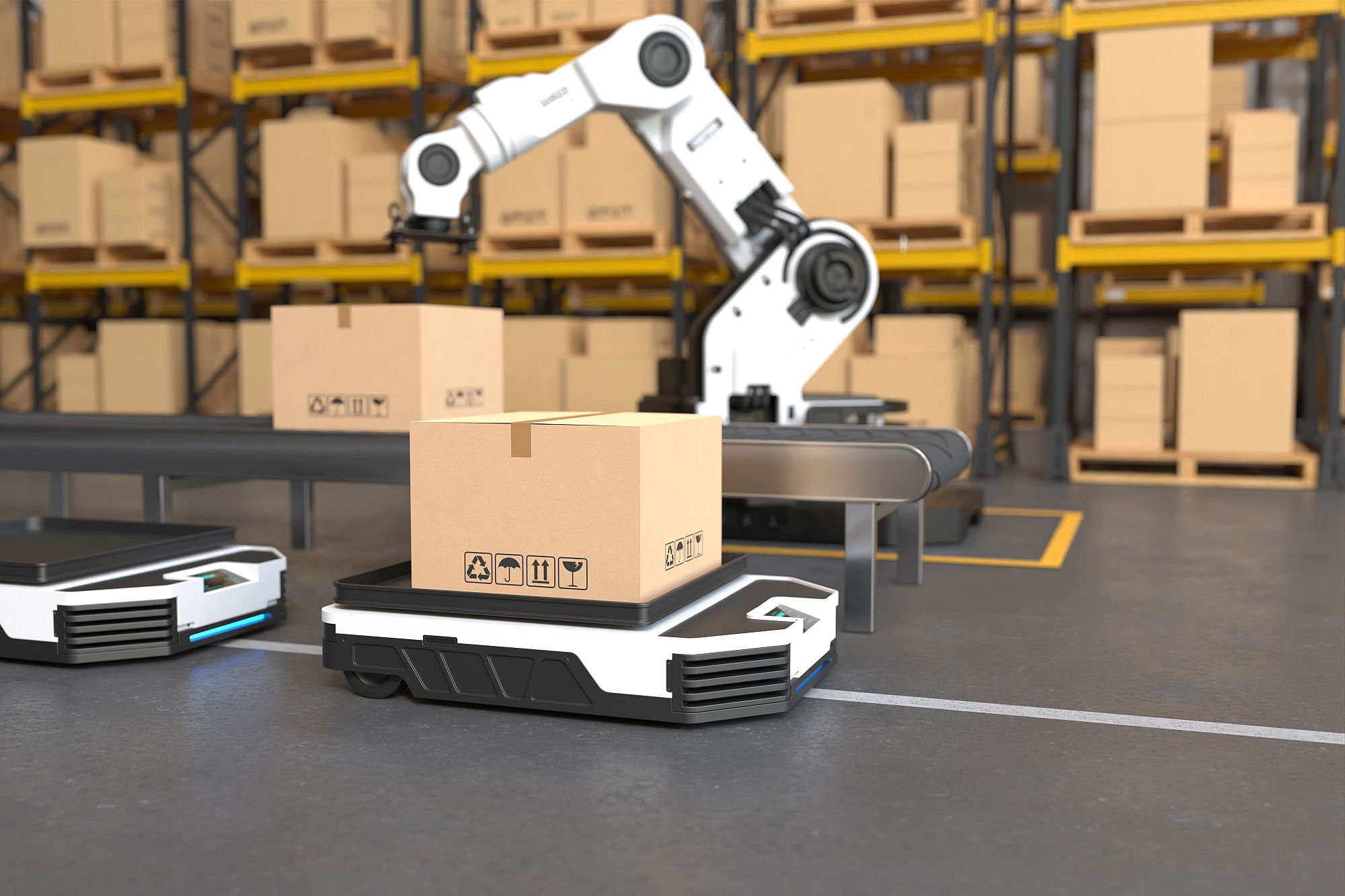
Productivity and agility must go hand in hand in the factory of tomorrow. A solution that delivers greater output today may become a limiting factor later if adjustments require a lot of time, expertise, or money. Limitless flexibility, on the other hand, risks making production expensive and difficult to manage.
Every improvement should therefore answer two questions:
- What gains does it deliver today?
- How easily can the company adapt its operations later?
This requires processes and systems that are stable, but that can also be expanded step by step. Productivity isn’t just about producing more with the same resources. The time and effort needed to integrate a new variant, working method, or technology also matter. Agility therefore becomes part of operational efficiency rather than a counterweight to it.
3. Ensure that your data infrastructure grows with you
For processes and systems to be adapted step by step, the information flows between them must be able to evolve too. Manufacturers often already have large amounts of data about customers, products, machinery, processes, and quality. However, the value of a new machine or application depends not only on what it can do on its own, but also on the extent to which it can exchange data with the rest of the production environment.
If every new application requires a separate connection, that exchange becomes increasingly complex and expensive. The goal, therefore, is not to collect as much data as possible, but to organise information so that different processes and applications can build on it. Shared definitions and scalable connections make it possible to add machines, systems, or data sources later without having to redesign the entire information flow every time.
This coherence should also factor into investment decisions:
- What information does a new solution make available?
- How does it integrate with existing systems?
- Can the information be reused later?
In this way, data becomes an integral part of the production infrastructure. It supports current operations and lowers the barrier to adopting technological applications that may become relevant in the future.

4. Make sure the organisation keeps up with changes
New data infrastructure and applications only create lasting value when it is clear who manages, monitors, and further develops them. During a project, responsibilities are usually clear. A project team, supplier, or in-house champion leads the implementation.
The real challenge often begins after implementation:
- Who monitors performance?
- Who oversees the quality of the data?
- Who decides on adaptations?
- Who takes action when the technology no longer fits the way the company operates?
Training, ownership, and management should therefore be part of the investment decision from the outset. This requires not only an implementation budget, but also clear responsibilities and capacity for maintenance and improvement.
Not all expertise needs to be available in-house. However, a company must decide what knowledge it needs to retain control and where it wants to rely on external partners. Process knowledge and technological expertise must continue to come together, even after the original project has been completed.
5. Make collaboration part of your technology strategy
Collaboration with suppliers, customers, technology partners, and research institutions does more than fill gaps in expertise. It enables companies to assess new developments more quickly, test solutions, and coordinate changes within the value chain more effectively. Targeted data sharing on orders, capacity, quality, and product changes also helps companies coordinate their activities more effectively, enabling the entire value chain to respond more quickly.
But this interconnectedness also creates new dependencies. Clear agreements are therefore needed:
- What information is shared, and who has access to it?
- Who remains responsible for decisions?
- How does a company ensure continuity when a partnership changes or comes to an end?
A company’s agility and competitiveness are therefore determined not only by its own capabilities, but also by the quality of its relationships and information flows with partners.
A technology roadmap links these choices together
The five choices aren’t separate from one another. For example, if a company wants to introduce new products more quickly, this has implications for processes, data, infrastructure, skills, and collaboration with partners. A technology roadmap offers a clear view of these connections and interdependencies.
The roadmap isn’t a list of technologies that need to be introduced according to a fixed schedule. It provides a common framework for assessing investments in terms of their contribution to the chosen direction. In doing so, it distinguishes between investments that deliver immediate operational value and the capabilities and conditions needed to seize new opportunities in the future.
‘A roadmap has to be flexible’
Bart Verlinden, Manager of 4.0 Made Real at Sirris

‘The value of a technology roadmap doesn’t lie in predicting which technology will break through in five years’ time. It makes clear the direction the company wants to take and the conditions it needs to put in place to do so.
This also means that a roadmap must be reviewed and adjusted regularly. When a new solution emerges, the question isn’t simply what is technically possible. The company also needs to assess whether it supports the chosen direction and aligns with the company’s processes, data, skills, and partners.
Sometimes the best decision is not to invest yet, but first to create the conditions that keep different options open.’
Would you like to know how a technology roadmap can help your company move forward?
From strategy to concrete steps
Sirris brings together the expertise companies need to translate their technology strategy into the right choices. As an independent innovation centre, Sirris isn’t tied to specific suppliers or solutions.
Together with the company, Sirris assesses potential investments for their strategic relevance and their technological and economic feasibility. Where greater certainty is needed, a choice can be explored further through technological advice, a feasibility study, or a test in an industrial environment.
How forward-looking is your production?

What technologies are already well established? Where do Flemish manufacturers want to invest further? And what challenges are slowing their next steps? Download the Smart Manufacturing Barometer and compare your technological position with that of other Flemish manufacturers. This helps you set clearer priorities and make better-supported investment decisions.
Discover the other articles in this series
- Smart Manufacturing Barometer 2026
- Bespoke solutions make us strong, but they’re complex
- Four insights: how Flemish manufacturing companies are investing in smart production technology
- From fixed automation to flexible, smart manufacturing
- How to make your shop floor smarter through digitalisation
- The factory of tomorrow begins today: five choices that determine your competitive edge ⬅ Current article
- What Factories of the Future do differently
Looking to define a technology strategy tailored to your business? Discover Sirris’s services or get in touch with our experts.