Repair, resale, and IP rights in practice
Repairing and reselling technology products is no longer a niche activity. Refurbished smartphones used industrial devices, repaired sensors, and second-hand machines are part of the circular economy. But many of these products are protected by patents, designs, trademarks, and software rights. Does this make the sale of repaired or refurbished products risky by definition?
In the European Economic Area (EEA), the resale of a genuine product is usually allowed once that specific product has been put on the EEA market by the IP owner or with its consent. This is often called the exhaustion principle (link to previous article about exhaustion of rights). It means that the right holder can normally no longer use those IP rights to prevent the resale of that particular item.
But repair and refurbishment add an extra layer. The question is no longer only whether the product may be resold, but also how far the reseller may go in repairing, replacing parts, updating software or changing the product before placing it back on the market.
Want to know more on this topic?
The Sirris Patent Cell, supported by FPS Economy, is your contact point for questions related to intellectual property.
What happens to IP rights when a product is refurbished?
A refurbished smartphone may still incorporate patented technology. Its shape may still reflect protected designs. It may still carry the original brand. Exhaustion does not make these rights disappear. It limits what the IP owner can still control for that particular physical product.
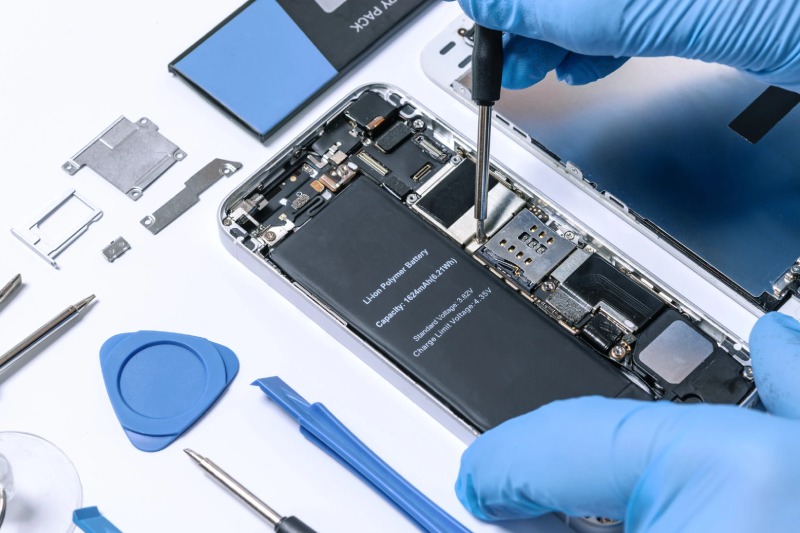
For patents, an important distinction is whether the company is repairing an existing product or effectively manufacturing a new patented product. Replacing a worn battery, screen or connector will often qualify as repair and is typically permitted using original or non-infringing compatible parts. However, a replacement part may itself be protected by a separate patent. Its manufacture or sale may therefore require authorisation, even if the intervention qualifies as repair.
For designs, a similar distinction applies to visible parts, such as casings, screen frames, covers, or machine housings. Design rights on the overall product are exhausted upon its first sale in the EEA by the right holder or with consent. This generally allows resale and normal repair but does not automatically allow you to copy protected spare parts. EU design law provides a specific repair exception for certain replacement parts whose appearance is dependent on that of the overall product, and which are used solely for repair to restore its original appearance. This exception is subject to specific conditions.
For trademarks, the focus is slightly different. A reseller may normally use the original brand name to identify a genuine product, for example when advertising a refurbished smartphone under its original brand. However, the trademark owner may have legitimate reasons to oppose further commercialisation, particularly if the condition of the product has been changed or impaired, or if the marketing creates a misleading impression of an official relationship, certification or warranty.
Software requires separate attention. When purchasing a device, the buyer often receives a licence to use its software rather than ownership of the software itself. However, under EU law, the right to distribute a software copy may also be exhausted, even if the original transaction was structured as a licence. This does not automatically allow unrestricted copying, modification or reinstallation of the software. The applicable copyright rules and licence terms must therefore be considered.
The EU Right to Repair Directive encourages independent repair for certain consumer products and restricts unjustified obstacles to repair. However, it does not provide a general exemption from IP rights or automatically authorise the copying of protected spare parts or software.

Two simple examples from consumer and industrial practice
A Belgian webshop buys genuine smartphones that were first sold in the European Economic Area. It tests them, replaces worn batteries where needed, grades the condition and sells them as refurbished smartphones, clearly indicating their condition and any non-original parts. In many cases, this business model should be possible, provided that consumer, safety, and warranty rules are respected.
An SME buys a used industrial robot or a used CNC machine from a European production site. It replaces worn cables, bearings, seals or safety components, tests the equipment and sells it as a refurbished robot or second-hand CNC machine. In many cases, the resale itself should be possible when the machine is genuine and was first marketed in the EEA with the relevant IP owners’ consent. The risk increases when the refurbishment involves protected replacement parts, software changes, or substantial modifications affecting safety or conformity. Care is also needed to avoid suggesting that the original manufacturer approved the refurbishment.
Three actions for Belgian technology companies
Before reselling a repaired or refurbished product, companies should consider four questions: Is the product genuine? Was it first placed on the EEA market with the right holder's consent? What has been changed? And how will it be presented to customers?
To mitigate risk, implement these three practical steps:
1. Document the origin of the products. Keep evidence that the goods are genuine and, where relevant, that they were first placed on the EEA market with the right holder’s consent.
2. Be transparent in marketing. Use the original trademark in a way that accurately identifies the genuine product. Avoid wording, logos, or packaging that could suggest official certification or partnership if this is not true.
3. Check the repair process. Map which parts are replaced, whether they are original or compatible, whether they affect safety, performance or compliance, and whether customer information and warranty terms are clear. Check whether replacement parts or software interventions require additional IP clearance, taking account of applicable repair exceptions.
Conclusion
Refurbishment and IP rights are not necessarily in conflict. The exhaustion principle is one of the legal reasons why second-hand and refurbished markets can exist. At the same time, it does not authorise all forms of repair or modification. Companies should be especially careful with products sourced outside the EEA, extensive rebuilds, unauthorised copies of protected spare parts, software interventions and marketing that could confuse customers.
For Belgian technology companies, the best approach is practical: treat refurbishment as both a circular business opportunity and a compliance topic. A clear sourcing policy, honest communication, and a controlled repair process can reduce many IP risks.