

AI saves time, but processes determine the real productivity gains
Generative AI makes individual tasks noticeably faster. However, we are still seeing only a limited reflection of these time savings in economic productivity. Why is that? One key explanation lies in the weak links in processes and organisations. For manufacturing companies, this is a key consideration in any AI investment.
AI saves time, but that is not enough
Anyone using generative AI today will immediately notice its impact. Texts are written more quickly. Software code is generated more quickly. You can find and process technical information in less time.
A European Central Bank survey confirms this experience. In 2026, 52 per cent of workers in the eurozone use AI for work. In 2024, that figure was still 26 per cent. Users also report a median time saving of around three hours a week. That sounds like a significant productivity gain. However, this growth is not yet reflected quite so strongly in the economic figures.
Labour productivity per hour worked in the European Union rose by 1.4 per cent in 2025. In the first quarter of 2026, the increase was 0.1 per cent compared with the same period a year earlier. There is therefore a striking gap between the spectacular time savings that AI delivers on individual tasks and what we ultimately see reflected in the economy.
Weak links hinder AI productivity
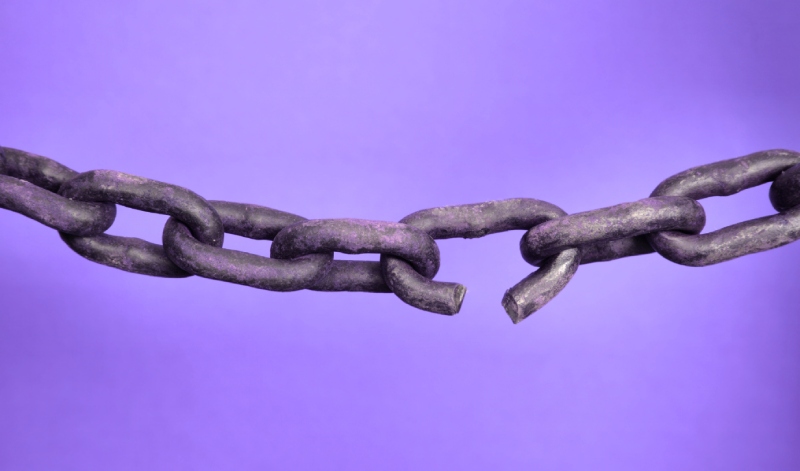
Stanford economist Charles Jones is not particularly surprised. In his article AI and Our Economic Future, he highlights the importance of weak links in a process. As long as certain essential steps remain difficult to speed up, they limit overall productivity.
This principle is well known in manufacturing. When a machine on a production line becomes ten times faster, the factory’s output does not necessarily increase accordingly. This is because output is limited by the weakest links in the process, not by the fastest step.
Something similar is happening with AI in information work today. A sales representative draws up a quotation more quickly, and an engineer analyses technical information faster. But that time saving is only of real value if the rest of the process can keep up.
This is particularly relevant for manufacturers. Their value stream consists of a combination of digital and physical processes. Thanks to AI, a work planner can draw up instructions more quickly, but this does not mean that a machine produces output any faster. AI can therefore speed up a task dramatically without total productivity increasing to the same extent.
Why AI productivity is likely to grow gradually
Jones is not pessimistic about AI because of this, but he points out one important condition: technological progress only becomes economic progress if organisations adapt accordingly. New AI capabilities must be integrated into processes, systems, and organisations.
Data must be usable and reliable. Employees need new skills. Roles and responsibilities will sometimes need to change. These adjustments take time.
We saw a similar pattern with previous groundbreaking technologies. Electricity and computers did not yield their full productivity gains immediately either. With AI too, we can therefore expect productivity to rise gradually. Jones consequently thinks in terms of decades rather than years when considering the economic impact of AI.
Look beyond your AI use case
For businesses, the weak-links principle has a clear implication: do not just look at what AI automates, but focus on what is holding back the performance of the entire process. An AI roadmap should therefore not simply start by asking which tasks you can automate using AI. Ask this question just as emphatically:
What is currently preventing our entire process from running faster, cheaper, or better?
For example, map out the process from customer enquiry to quotation, or from customer order to finished product. Next, look for areas where the process slows down. Where does work pile up? Where is information missing? Where does a decision get held up? Where does crucial knowledge lie with one employee? This is where you will find potential weak links.
You can deal with some weak links highly effectively using AI. Others require better data or simpler processes first. Sometimes clearer responsibilities are needed. In other cases, effective integration between systems is lacking.
Look for the next weak link each time
As AI takes on more and more tasks, the weak links will also shift. For businesses, therefore, AI is not a one-off project, but an ongoing process. Identify what is currently limiting performance and determine what combination of AI, process improvement, and organisational change is needed to remove that limitation.
This is how genuine productivity gains emerge: not because one task is completed ten times faster, but because the entire process accelerates step by step.
In summary
AI dramatically speeds up individual tasks, but does not automatically deliver the same benefits across the entire business. Weak links in processes, data, systems, and the organisation limit the outcome. If you want to derive greater productivity from AI, do not just look for AI use cases, but improve the entire value stream.
Conclusion: use AI to improve processes
Look beyond the individual AI use case. Identify the next weak link each time and combine AI with process improvement, reliable data, and organisational change. This allows time savings on individual tasks to translate step by step into productivity gains across the entire process.
Recommended reading
This article was inspired by Charles I. Jones, “AI and Our Economic Future”, published in 2026 in the Journal of Economic Perspectives.
You can also watch Charles Jones’s YouTube presentation on this topic.


