
Professor Clement Hiel on composites innovation, tinkering and the strength of the composites community in Belgium
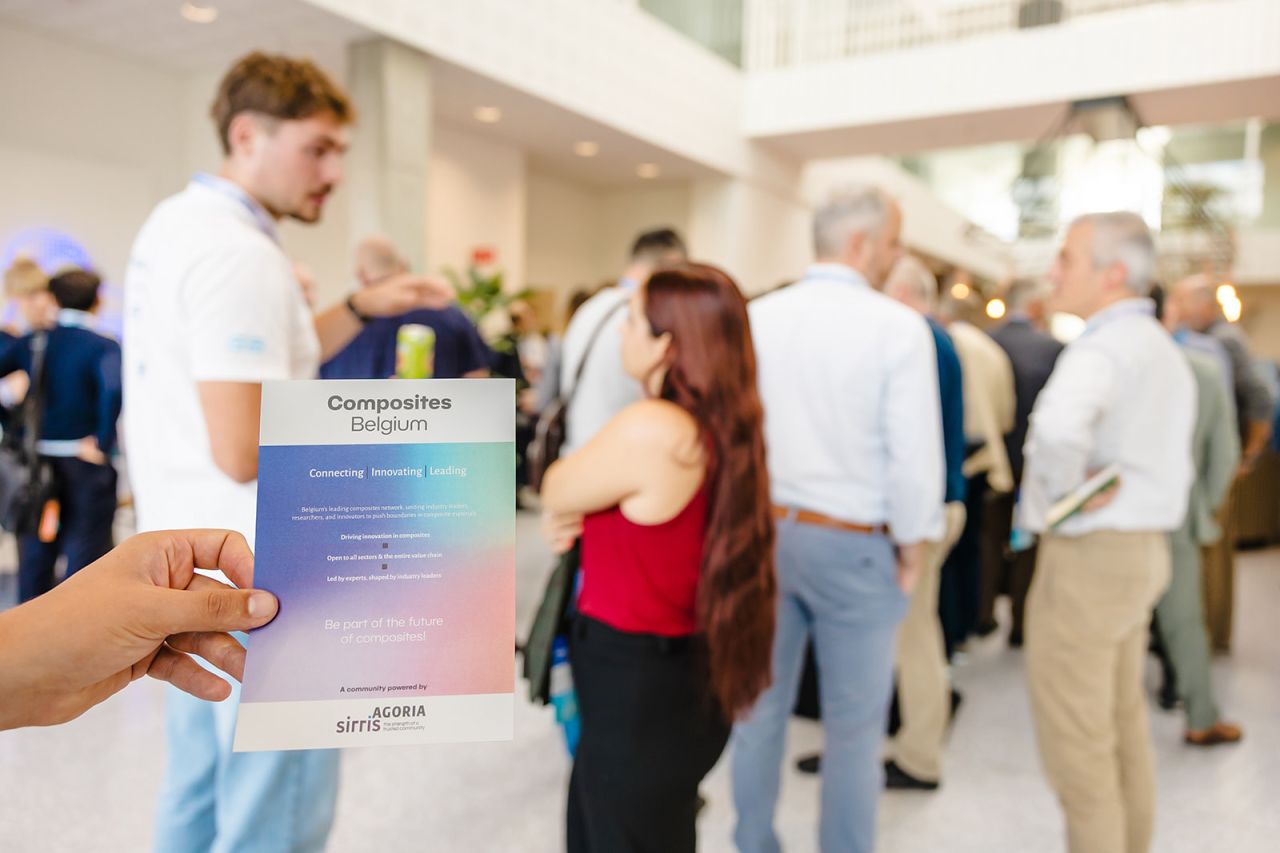
What if the next composites innovation arises not from a new material, but from an unexpected combination? Between composite and wood, between an idea and the shop floor, or between people from different sectors? For Professor Clement Hiel, that is where innovation begins. It’s a vision that is closely aligned with Composites Belgium, the new community set up by Sirris and Agoria.
According to Hiel, it often starts with something simple: taking a fresh look at what’s seemed self-evident for years. Take a conventional high-voltage conductor. It has been made of aluminium and steel for decades. Years ago, Hiel asked himself why is that, actually? The question led to an alternative design featuring a composite core. Today, that innovation is taking on new significance due to the rapid growth of data centres and artificial intelligence.
Hiel refers to our tendency to stop questioning familiar solutions as ‘the anaesthetic of familiarity’, which is why he advocates ‘broad and deep’ thinking: looking beyond the boundaries of materials and sectors, and giving ideas the space to grow.
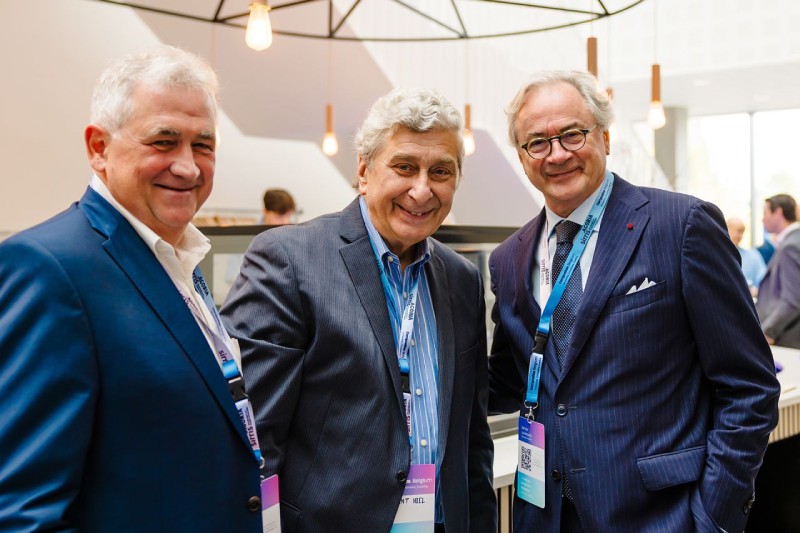
In the run-up to the launch of the Composites Belgium community on 1 October 2026, Sirris expert Linde De Vriese and Kevin Poelmans from Agoria spoke with Hiel, managing director of Composite Support & Solutions. It turned into a conversation about composites, practical knowledge, curiosity and the connections between people and disciplines.
From workshop to NASA: practical knowledge as a driver of innovation
‘Tinkering’. The word comes up several times during the conversation. According to Hiel, anyone for whom that has negative connotations has misunderstood. ‘To me, tinkering means experimenting: trying things out, creating, making adjustments and learning from the process. And for that, you need practical curiosity.’
Hiel picked up that attitude early on in his life. The foundations were laid in his technical education, where he learnt, among other things, welding, forging and milling. Later he studied engineering at VUB and went on to obtain his PhD there. He then moved to the United States, where he worked for NASA and other organisations on advanced materials and applications.
The combination of hands and mind still shapes his view of innovation. Theoretical and technical knowledge are essential, but they are not enough. Manipulating materials, building something, testing it, ‘tinkering’, figuring out why it doesn’t work and starting again: that too is a source of knowledge.
What are composites and what makes them so interesting?
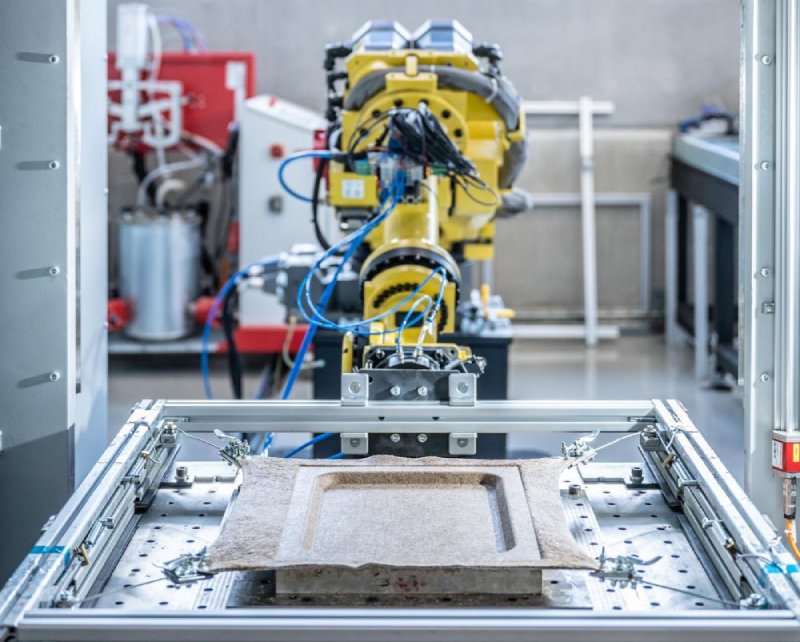
‘The interesting thing about composites is that you combine materials to create properties that are harder to obtain with a single material.’
Take glass, for example: a glass window shatters relatively easily. Draw glass into very fine fibres and its mechanical properties change. Then combine those fibres with a plastic matrix that holds them together and protects them. The result is a fibre-reinforced composite that is both lightweight and strong. This makes composites particularly interesting for applications where weight is a key factor: from aeroplanes and cars to bicycles and sports equipment.
Yet confidence in those materials wasn’t always there. Hiel refers to Formula 1 in the 1980s. At the time, carbon-fibre composites were still new and there were doubts about their safety. Wouldn’t such structures shatter like an eggshell in a serious collision?
Experience proved otherwise. Today, composites are simply essential to the performance and safety of Formula 1 cars.
Innovation in composites starts with the problem
The fact that composites have special properties does not mean that they are the best choice in every situation. ‘On the contrary,’ says Hiel. ‘Sometimes wood, steel or aluminium is the better choice. The strongest solution often comes from combining materials cleverly.’
But how do you reliably bind composite to composite, metal or wood? And how do you adapt that bond for industrial production?
Hiel has been working on that question for years. He was one of the people involved in developing snap joining: structural snap-fit joints that assemble components without the use of conventional bolts or rivets. It may sound like a technical detail, but according to him it actually opens the door to new applications. Because once materials can be combined more easily, a designer no longer has to choose between wood, metal or composite. Hiel sees an important opportunity here: to stop thinking in terms of a single material, but to look beyond the boundaries of materials and sectors.
New applications and opportunities for composites
What do composites have to do with furniture?
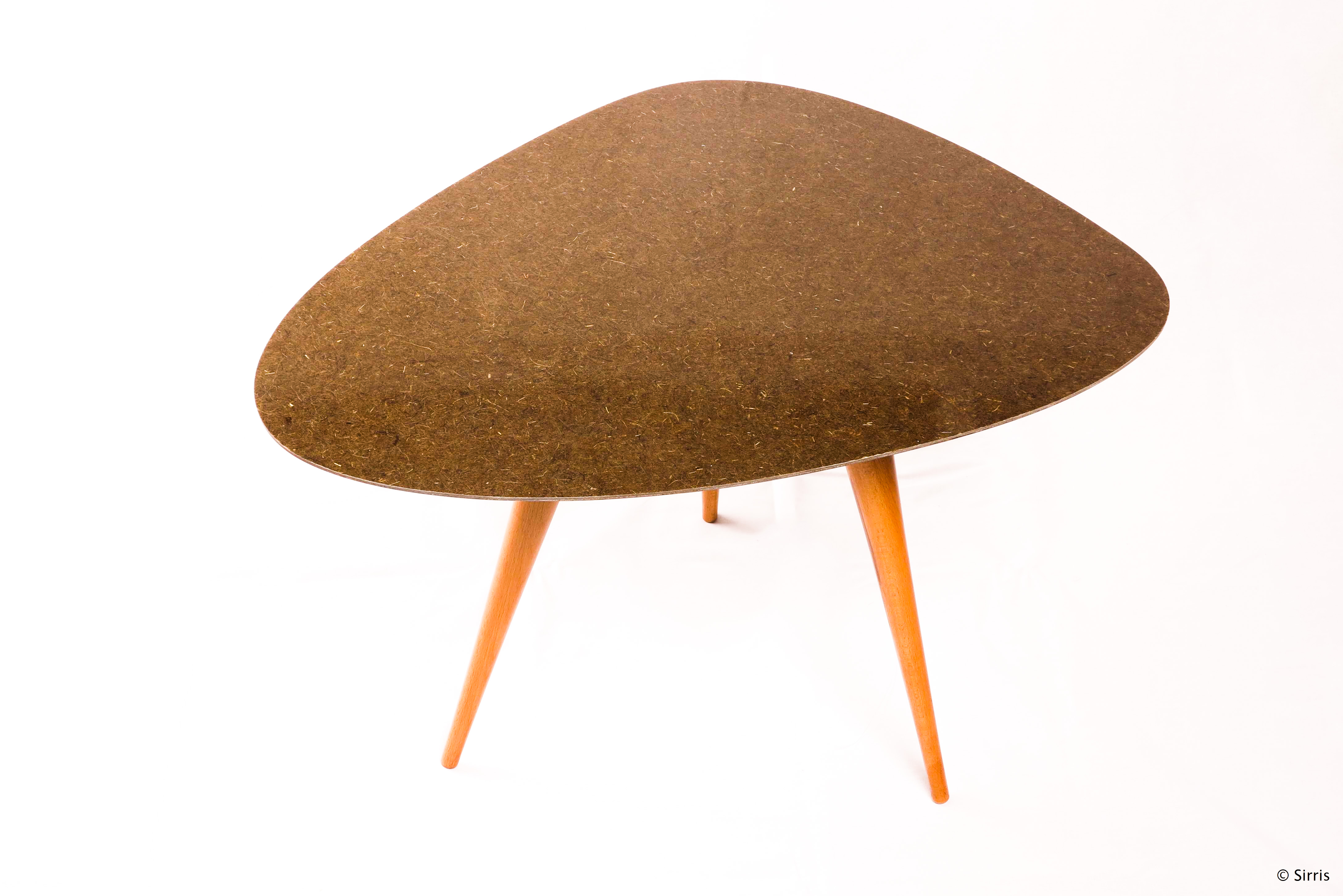
Take the high-end furniture industry, for example. At first glance, it seems very remote from advanced composites technology. Nevertheless, Hiel sees some interesting opportunities. Combine wood, metal and composite materials using clever joining techniques, and the result is lightweight, strong structures that are industrially assembled.
According to Hiel, that market currently receives little attention from the composites industry. Composites companies have traditionally focused heavily on aerospace. That makes sense: it’s where the materials underwent a significant part of their development. However, introducing new technology in those sectors takes a long time. Hiel talks about development programmes lasting ten to fifteen years.
Why not experiment in the meantime in markets that move more quickly? Furniture, sport, construction and energy all offer opportunities to experiment with combinations of materials and production techniques. In this way, companies can build up their expertise and track record. That experience may also prove valuable later on in sectors with longer development cycles. For Hiel, this is what ‘broad thinking’ means: looking beyond the material and the market you’re already familiar with. But he takes that idea even further.
Circularity: giving existing composite structures a new purpose
For Hiel, ‘broad and deep thinking’ also means taking a different approach to circularity. He cites discarded wind turbine blades as an example. They are large, strong and designed to withstand heavy loads for many years, yet at the end of their first life cycle, attention often turns immediately to processing or recycling.
Hiel considers incorporating a piece of a wind turbine blade into a bus shelter or a cycle shed to be too limited. Why not investigate what happens when we put three or four whole blades together? For example, they could be given a structural purpose in an industrial hangar, a housing estate or emergency accommodation.
From composite prototype to industrial application
It is a big step from a promising material concept to a reliable industrial product. ‘You can build a working prototype and even apply for a patent. That’s great. But you also need to industrialise it.’
For that to happen, the whole supply chain has to be right:
- Are the right raw materials available?
- Is the production process scalable and reproducible?
- Have the necessary tests and certification been arranged?
- Are there any partners helping to bring the product to market?
- Is the end product competitively priced?
According to Hiel, it is only when these elements come together that an invention acquires industrial value. However, that economic reality must not limit innovation to what customers are already asking for today. ‘Nobody asked for the iPhone’, Hiel points out.
In doing so, he touches on a sensitive area. Responding to existing demand is relatively straightforward, but innovation also requires you to look ahead and try to anticipate what needs will arise tomorrow.
Innovation requires time to ‘tinker’
This is where Hiel’s argument in favour of practical experience comes up again. In his view, engineers must be able to do more than just calculate and design. They also need to keep in touch with what happens when their design is actually put into practice. Hiel refers to an aeroplane manufacturer where the engineers’ desks are literally on the shop floor. This allows them to see at first hand how their design is being translated into production.
In that context, ‘tinkering’ doesn’t just mean trying things out. It means experimenting: manipulating materials, making something, testing it, analysing mistakes and starting again.
But according to Hiel, experimenting requires something else as well: the willingness to share an idea before it is fully polished.
Bounce a fledgling idea off other ideas
That may sound counterintuitive in a world of intellectual property and patents, but Hiel sees too many ideas coming to a standstill because people are mainly trying to protect what they think they have. As he himself pithily puts it: ‘If you don’t show anything and don’t say anything, you can’t learn anything.’
According to him, a fledgling idea needs time to mature. And that requires different perspectives. Discussions with people from other fields can steer an idea in an unexpected direction, even if they don’t immediately produce any concrete results.
Hiel says with a laugh that his wife sometimes asks him why he ‘wastes’ hours on conversations. His reply: ‘I’ve decided to “waste” a few hours of my time every week. Those hours don’t necessarily result in a product or project straight away. But it’s precisely in such conversations that insights sometimes emerge that I would never have achieved on my own.’
The Composites Belgium community unites the composites value chain
This is why Hiel sees great potential in a Belgian composites community. Belgium has companies, researchers, centres of excellence and technological expertise in the field of composites. For successful industrial applications, though, these different parts of the value chain need to come together. ‘I believe 100% in creating a cohesive and unifying ecosystem that is also capable of thinking broadly and deeply’, says Hiel.
According to Hiel, organisations such as Sirris and Agoria have an important role to play in this regard. Not by simply copying what larger industrialised countries are already doing, but by bringing stakeholders together and identifying areas where Belgian expertise can make a difference.
In his view, such an ecosystem only really works when participants do more than simply show what they already know. Bring a problem to the table as well. Try to find someone from a different background. Bounce an idea off knowledge from another sector. It is from that interaction that ideas emerge which you would find difficult to come up with on your own.
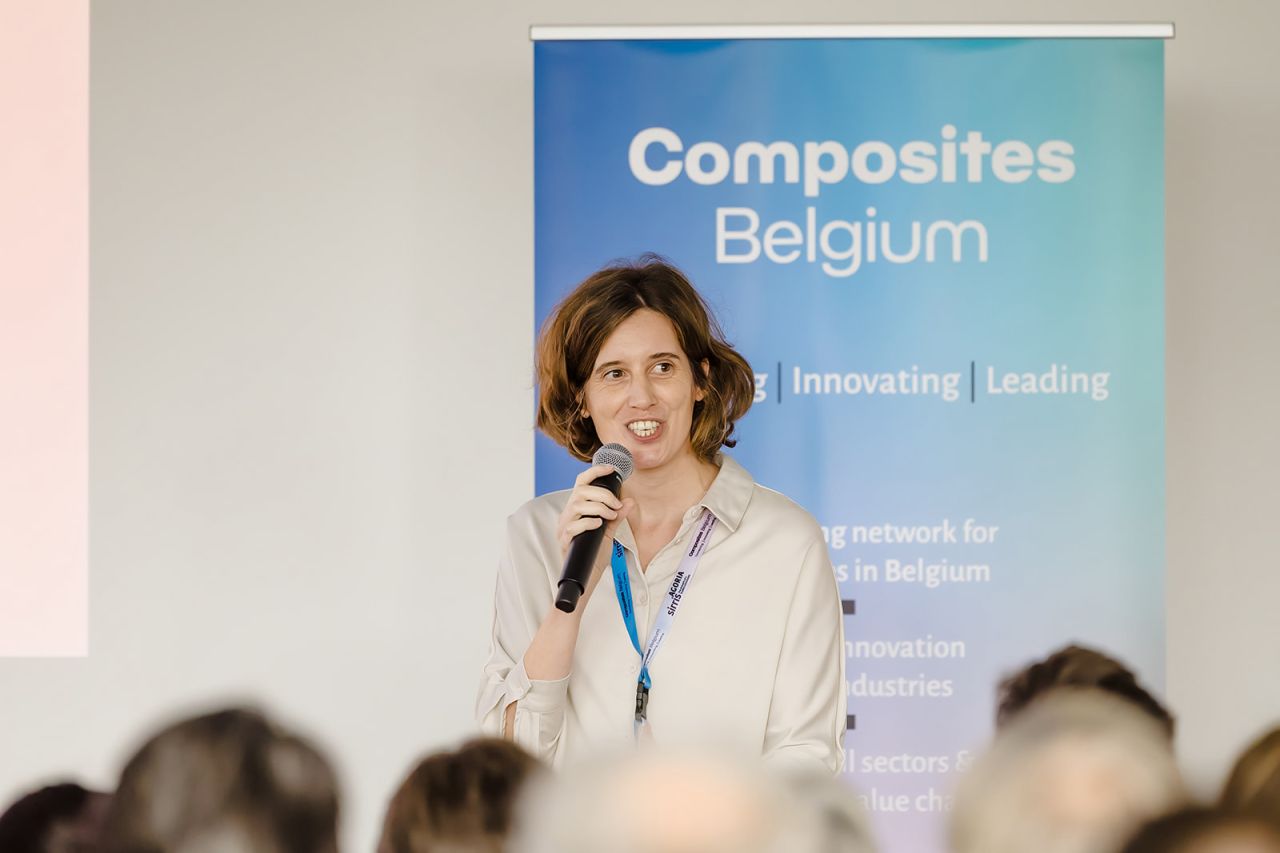
A small movement can keep an industry running
Towards the end of the conversation, Hiel quotes the American inventor and designer Buckminster Fuller, who used the ‘trim tab’ as a metaphor: a small component on the rudder of a large ship. Moving that small surface changes the flow around the larger rudder. In this way, a small component ultimately helps a huge ship to change course.
Fuller saw this as an illustration of the impact an individual can have. His gravestone therefore carries the epitaph: ‘Call me Trimtab’.
Hiel sees this as a metaphor for Belgium and for a community such as Composites Belgium. A small country doesn’t need to operate on the same scale as large industrialised nations to have an impact. Even a relatively small ecosystem can ‘affect the flow’ and in doing so bring about a much larger movement.
Perhaps that also best sums up Hiel’s vision of composite innovation. The breakthrough does not necessarily lie in a single new material. It may be found in the joint between the composite and the wood or metal. Between design and production. Between experiment and market. And above all: between people.
Meet the Composites Belgium community
Sirris and Agoria are bringing together companies, researchers and experts in the field of composites, their applications and industrialisation. Share knowledge, forge new connections and, together, discover applications that would have been hard to spot when working within a single discipline. This is how we can build a stronger Belgian composites ecosystem.
Join the Belgian composites community
Join a community that brings together expertise, innovation and collaboration across the Belgian composites value chain. Connect with peers, discover new opportunities and help shape the future of composites in Belgium.