One day. Thirteen speakers. No polished success stories.
PR_D_CT DAY brings Belgium's product community together for honest conversations about building better products. Organised by Sirris, The Product Consortium, and Dualoop, the event connects product managers, product owners, founders, and product leaders. From AI and product strategy to real-world failures, speakers share practical lessons you can apply. No polished success stories, just genuine insights from people who build products every day.
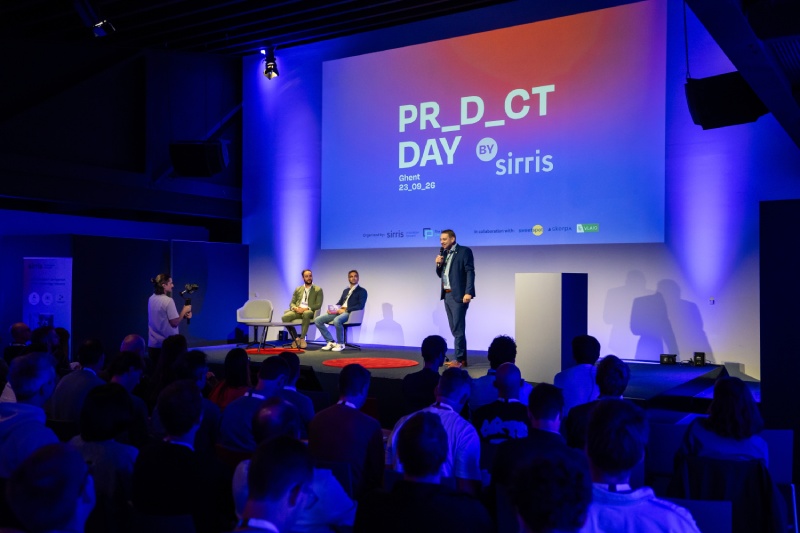
Real product stories from startups to industry
Each edition brings together speakers from startups, scaleups, and mature product companies. The morning follows that arc deliberately: from early-stage lessons to the challenges of sustained growth. Breakout sessions go deeper into themes that emerged from the community itself.
The speaker line-up is rooted in the digital product world: SaaS, platforms, and tech-enabled services. But it deliberately reaches beyond it. Companies building hardware, industrial technology, or tech-embedded physical products bring a perspective that sharpens the conversation for everyone. That mix is intentional: the most interesting ideas often come from outside your own context.
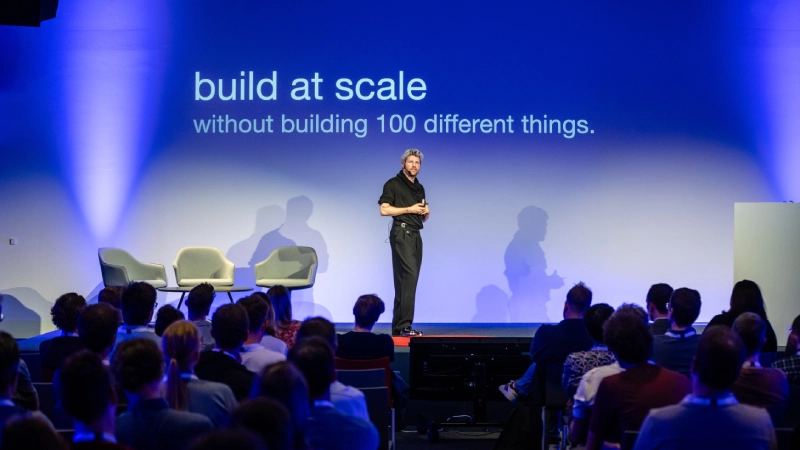
The 2026 Ghent edition featured 13 speakers and drew nearly 200 attendees. It covered four broad themes that reflect where the product management profession stands today.
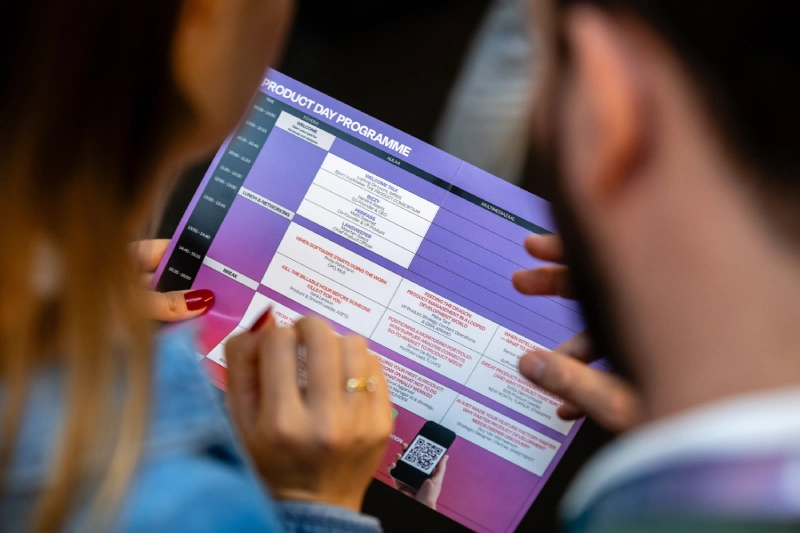
The themes defining PR_D_CT DAY 2026
AI shifts the bottleneck from building to knowing
Several speakers arrived at the same conclusion from different directions. When AI makes shipping code fast and cheap, the real competitive challenge moves upstream. The common concern: are product managers building the right thing?
Guy Van Wijmeersch (Sweetspot) called this out directly: AI just made your feature factory faster. That is only good news if your discovery is sharp. Petra Tant (Aprimo) explored the same tension from inside the development loop: AI agents perform only as well as the specifications you feed them. Vague input produces unreliable output.
Hendrik Keeris (Bizzy) added a cautionary note from experience. Chasing AI trends and automation hype led his team to product instability and dissatisfied customers before they corrected course. His takeaway: stay focused on the specific customer problem and validate rigorously before you build.
Your moat is what AI cannot buy
Nick Boucart (Sirris) framed the strategic challenge for the whole room: when AI intelligence becomes a commodity anyone can purchase, automating existing tasks no longer creates a durable advantage. What does? Proprietary data, accumulated trust, and human accountability.
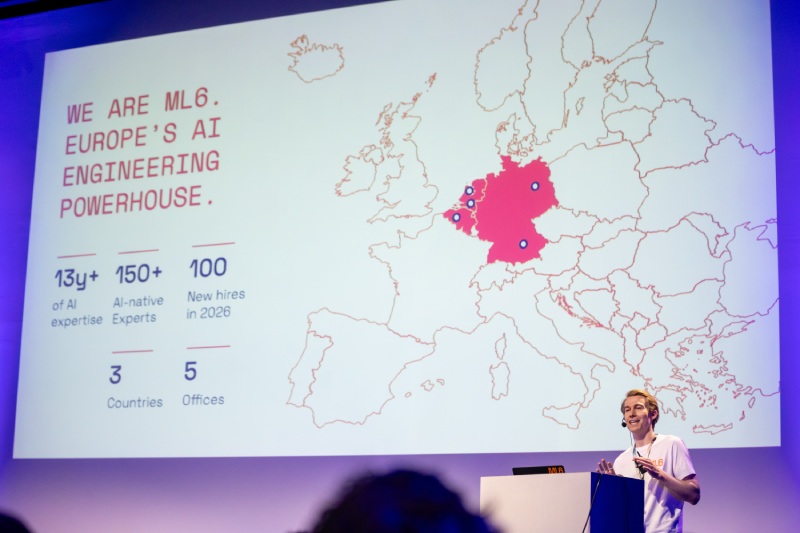
Maarten Saeys (Lansweeper) made the same point through his company's own growth story. Owning the underlying core technology, IP, and data meant that AI became a tailwind rather than a threat. Philipp Pohlmann (ML6) pushed the idea further: when software starts doing the work itself, the product no longer ends at the interface. It ends at the outcome.
Pricing, portfolio, and the case against the billable hour
Sara Larsson (Azets) challenged an assumption most product leaders had never questioned. The billable hour is a 500-year-old model that rewards time spent rather than value created. As AI automates execution, what remains scarce and valuable is human judgement, strategy, and advice.
Simon Logghe (Adomate) shared a personal story of two failed product directions before finding a model that worked. Product-market fit is a search, not a destination. Recognise wrong turns early and work backwards from the customer problem.
Matti Desmet (Peripass) presented a specific case: launching a second product line that grew from zero to nearly 10,000 users and more than 300,000 euros in annual recurring revenue (ARR). His talk was rated the most valuable of the day by a wide margin.
His clearest lesson: one dedicated product owner is better than three people working on it part-time. A feature is not done when the minimum viable product (MVP) ships. It is done when customers adopt it.
The human side of product leadership
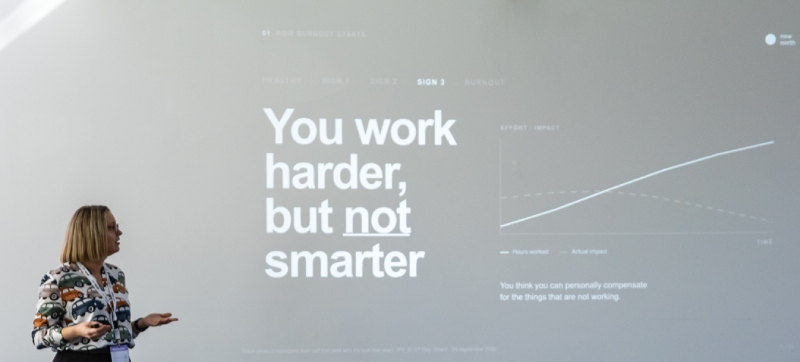
Edita Dermontaitė (New North) addressed something the product community rarely talks about openly: burnout. Her analysis pointed to a structural problem: high expectations, high accountability, and little authority.
When organisations give product managers responsibility without matching authority, the result is predictable. The solution is equally clear: match the authority to the responsibilities of the role.
The talk nobody saw coming
Each year, one or two speakers land differently than expected. At the 2026 edition in Ghent, that was Maarten De Schuymer (Aikido Security). He was rated the most surprising speaker of the day.
His premise: rigid roadmaps rest on the illusion that the future is predictable. Aikido builds its product by responding quickly to customer signals, saying no until the answer is clearly yes, and waiting until technology can solve a problem at its root rather than working around it.
For a room trained to think in quarterly plans, that was a challenging argument that stayed with people.
What you take home from PR_D_CT DAY 2026 in Ghent
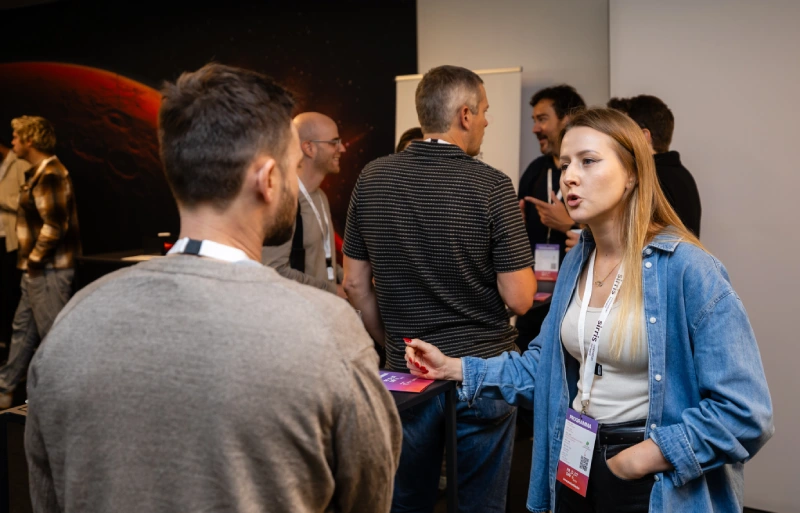
The format changes from year to year. The themes evolve. But the value remains consistent: spending a full day with people who are working through the same challenges as you and listening to speakers who are willing to share openly what it actually took to make progress.
Across the 2026 Ghent edition, five ideas kept coming back:
- Discovery over delivery. The competitive edge moves to asking the right questions, not shipping the fastest
- Outcome over output. The product is responsible for the result, not just the interface
- Judgement over hours. Time-based pricing undervalues what humans actually bring
- Proprietary assets over generic tools. Unique data, IP, and trust are the moats that matter
- Authority alongside accountability. Sustainable product teams need both
Two editions, one community
PR_D_CT DAY takes place twice a year: in Ghent in September and in Louvain-la-Neuve in November. This brings the same format and community to the French-speaking product world.
PR_D_CT DAY in Louvain-la-Neuve on 25 November
Do you manage or build digital, physical, or hybrid products? Join fellow product professionals at the next PR_D_CT DAY and spend a day with the people building Belgium's most ambitious products.
Partners
In collaboration with