

Belgian pioneers are building the drone ecosystem with support from Sirris
Drones have long since become more than just flying cameras. They are increasingly becoming integral components of complex digital ecosystems that bring together software, data, artificial intelligence, and autonomous systems.
In ports, industrial environments, and urban areas, drones are now being used to support logistics processes, infrastructure inspections, monitoring, and safety-critical operations. At the same time, complexity is also increasing. As more systems become interconnected, new challenges arise around safety, reliability, cybersecurity, and operational scalability.
Which drone is flying where? Which systems are exchanging data? How can an operation remain safe when several drones are active at the same time? And how do you ensure that critical information remains protected? These are precisely the questions companies are facing today.

Belgium as a testing ground for drone innovation
Belgium plays a prominent role in this. Despite its small size, our country is one of Europe’s frontrunners in professional drone applications. Belgian companies are developing solutions for drone logistics, infrastructure inspections, air traffic management, and autonomous operations that are now also being used beyond our national borders.
This position is no coincidence. Innovation does not arise within a single organisation, but within ecosystems in which companies, research institutions, and innovation partners work together. Combining expertise in aviation, software development, AI, cybersecurity, and industrial applications creates solutions that go far beyond the drone itself.
Sirris is helping companies put these innovations into practice more quickly. As an innovation partner, Sirris supports organisations in tackling technological challenges involving digital infrastructure, cybersecurity, AI, data analysis, and collaborative projects at Flemish, Belgian, and European levels.
More than just drones
Although drones often attract the most attention, the most innovative applications show that the real added value lies elsewhere.
Today, professional drone operations are not just about flying. They require reliable software, secure data exchange, smart algorithms, and digital infrastructures capable of processing and interpreting large amounts of information. We see the same thing among the Belgian companies featured in this blog series.
One is developing new logistics applications for industrial environments. Another is converting drone footage into useful insights for maintenance and inspections. Yet another is building the digital infrastructure needed to organise drone traffic safely. Together, they demonstrate just how wide-ranging and innovative the Belgian drone ecosystem is today.
Belgian companies are helping to build the drone ecosystem
1. ADLC: putting drone logistics into practice
When Europe set about establishing a regulatory framework for drone traffic, ADLC saw an opportunity. Today, the company uses drones to transport sensitive petrochemical samples in the Port of Antwerp.
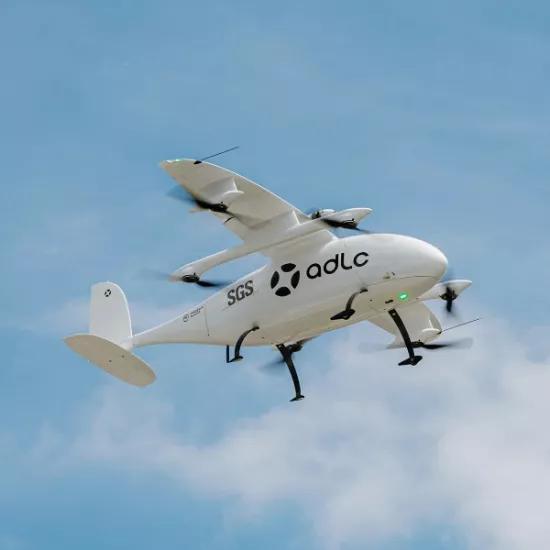
Behind these operations lies a combination of software, monitoring, cybersecurity, and operational expertise. Through joint research and innovation projects with Sirris, ADLC is working on the next step in professional drone logistics.
The company demonstrates how drones are evolving from a promising technology into an operational reality.
Read the ADLC case study
2. Skyebase: from inspection to data-driven maintenance
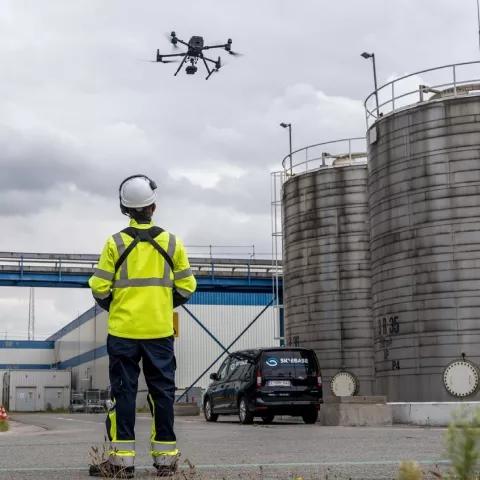
Drone inspections make infrastructure inspections faster, safer, and more efficient. But for Skyebase, the real challenge begins once the drone has landed. Thousands of images, thermal scans, and 3D models need to be processed, analysed, and interpreted.
The company has therefore developed its own software platform and is investing heavily in AI and anomaly detection. Sirris supports Skyebase in the continuing development of new inspection applications and innovative digital solutions.
As a result, inspections are gradually evolving from visual checks to data-driven maintenance and predictive insights.
Read the Skyebase case study
3. Unifly: the digital infrastructure behind drone traffic
When Unifly was founded, a market for professional drone traffic barely existed. Today, the company supports governments, ports, and aviation organisations worldwide in organising drone operations safely.
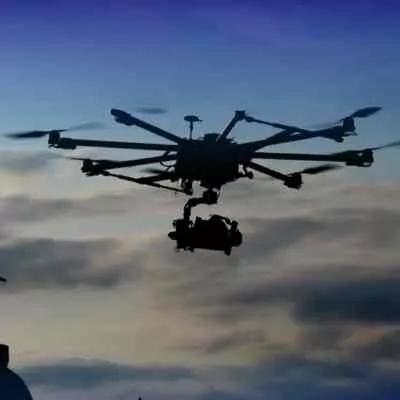
In addition, Unifly contributed to the development of European regulations governing drone traffic.
In collaboration with Sirris, the company is working on various innovation projects and research initiatives involving technologies that support the growth of professional drone traffic. In this way, Unifly is helping to lay the digital foundations for the next generation of air mobility.
Working together to ensure safe and scalable drone operations
These three examples show that the future of drones is not just about hardware or aviation technology.
Successful drone solutions require a combination of software, AI, cybersecurity, operational expertise, and collaboration between various partners. It is precisely this cross-fertilisation that makes it possible to develop new applications more quickly and scale them up safely.
Companies such as ADLC, Skyebase, and Unifly each demonstrate, through their own areas of specialisation, how drones are increasingly becoming part of broader digital ecosystems. From logistics and inspections to air traffic management, applications are becoming smarter, more autonomous, and more data-driven.
By connecting businesses, pooling expertise, and supporting innovation projects, Sirris is helping to accelerate this process. In this way, Belgian companies are helping to build the safe, reliable, and scalable drone solutions of tomorrow.