

How Sirris is working with businesses and academics to create a smart future for production processes
How do you prevent worn-out cutting tools from unexpectedly paralysing your production process? During the CIRP CMMO conference 2025, Tom Jacobs (Senior Engineer Precision Manufacturing at Sirris) gave a keynote on precisely that subject.
In this interview, he explains why predicting tool wear is crucial nowadays, and how Sirris is working with businesses and academics on solutions that can be used in practice – by seeing technology not as an end in itself, but as a means to help people make better decisions and have more control over their processes.
Tom, why is CIRP CMMO important for Sirris and industry?
"CIRP is an international academic forum that focuses on high-level production research. Every year, it organises the CMMO (Conference on Modelling of Machining Operations). Leading university researchers and research institutions share their work at this conference. For Sirris, this is a perfect opportunity to gain insights and at the same time demonstrate our own expertise. We want to understand what universities are doing and apply that knowledge to the needs of our businesses. And this is a two-way process – we present practical challenges to the academic world. In this way, we bridge the gap between academic research and practice."
What was the main point in your keynote speech at CIRP CMMO 2025?
"My keynote was about monitoring and predicting wear in cutting tools, a problem that many businesses have to contend with. At Sirris, together with KU Leuven and five Flemish businesses, we’ve developed a VLAIO project on this subject. Academic research on how to monitor wear properly has been going on for decades, but businesses are still grappling with very practical questions. We wanted to bridge that gap: how can you achieve usable, feasible solutions in a production environment?"
What did the project on predicting tool wear actually involve?
"We combined two strands:
- Sensor analysis of sound, accelerations and forces on the tool;
- Image processing with a high-resolution lens linked to an industrial camera.
In addition, we constructed our own fully labelled data set consisting of time series combined with sensor measurements, while varying the material and the process parameters. Each cycle was recorded with sensor data and an image of the cutting edge. The complete data set was structured and documented, and is available as a source for further research."
That sounds like a lot of work…
"It was. Collecting the data properly accounted for half the work. Without proper input, predictions are worthless. We had to centralise, structure and automate everything. This turned out to be really useful: our efforts have resulted in new configurations that can also be used for other applications.
The effort involved in data collection was also recognised at the CIRP conference: many of those who attended said that they are struggling with the same challenge. It shows how crucial this step is on the road to using artificial intelligence."
What does this mean for the future of tool wear prediction?"The process of switching to artificial intelligence starts with the data. Without a robust database, AI is worthless. Many businesses see AI as a magic wand, but first your data has to be sorted out. Businesses that want to get started with artificial intelligence tomorrow need to invest in data integration today. Data is often still spread out across “islands” within production: separate registration systems, manual notes, outdated systems and so on. Sirris helps businesses to bring these sources together and structure them, so that they form a basis for sustainable, smart applications. By integrating sensor data, images and process knowledge, we feed models that create real value." | 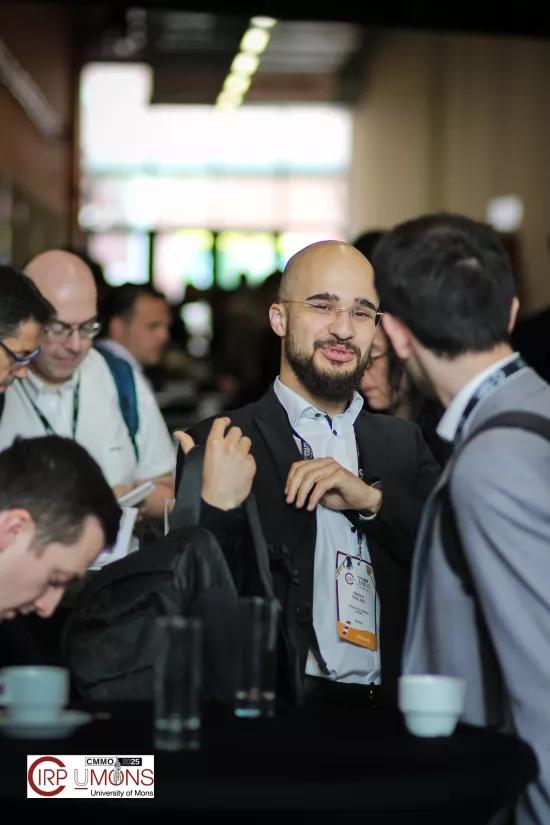
|
What did the project deliver in concrete terms?
"Quite a lot. We developed a “cascade model” that combines real-time measurement data with image recognition. When the system detects deviations, it automatically triggers the imaging of the tool, resulting in an immediate and accurate picture of the wear.
The system gives plenty of warning when the cutting edge wear exceeds a certain limit. This model has been tested in realistic conditions: production environments including cooling and machining.
So we now have a prototype, as well as new insights that businesses can use."
What did the participating businesses think of the process?
"The five businesses in the project were not competitors, so there were no commercially sensitive issues, but they had similar production processes and learned a lot from each other. Each contributed its own specific application and experience, such as machining with very small diameters or using monitoring within complex Swiss-type machines.
The businesses found the fact that their own materials, processes and tools were central particularly valuable. They were able to test the prototype themselves in their production environment. The technology is therefore not only academically sound, but also applicable, scalable and specifically relevant."
What was Sirris’ role in this?
"Among other things, our added value came from connecting the parties. We brought together the right technologies, worked with the right experts – from data specialists to image processors – and always kept an eye on the industrial reality. This enabled us to develop solutions that go beyond the lab and can be used effectively in the work environment. The project structure also worked to our advantage: an open collaboration between businesses with similar processes, with Sirris as technical director. This complementarity is crucial."
Was there a lot of interest at the conference itself?
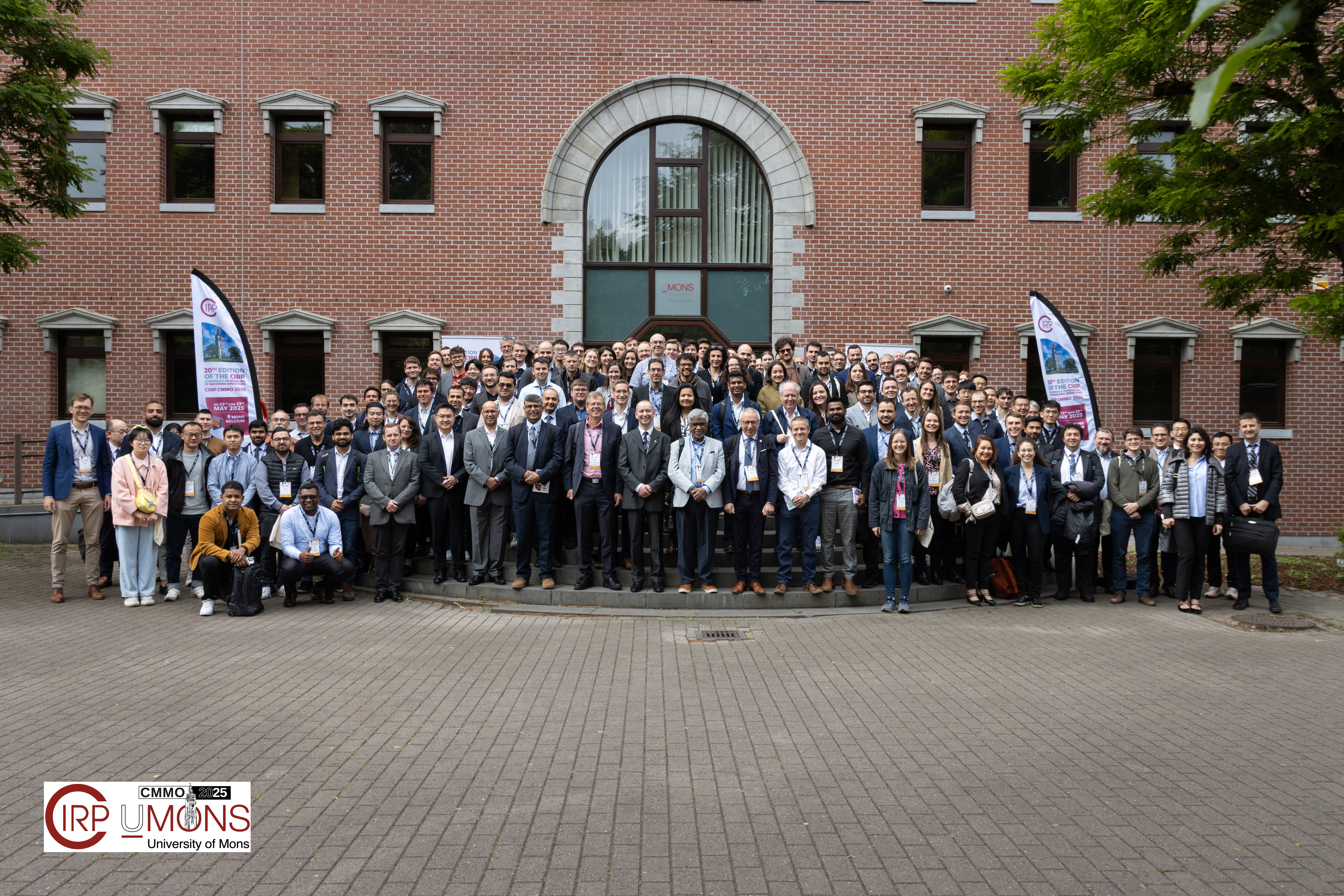
"Yes, absolutely. The CIRP lasted two days and was a success. It was striking to note how many academics are still working intensively on tool wear. Despite forty years of research, the topic is very much alive, because the translation into practice is an ongoing process.
The Sirris project was received positively, precisely because it converts theory into practice. Hopefully, new collaborations will follow from the contacts made there."
What if a business reads this and thinks: we want this too?
"I’d definitely recommend that they get in touch with us. Sirris is happy to help businesses apply these insights to their own real-life conditions. Whether you want help with an initial data trajectory, a prototype or improving existing processes, we have the experience and the tools to support you."
Predicting tool wear requires more than a smart model (AI or otherwise):
It requires insight into processes, knowledge of sensor technology, experience with image analysis and, above all, a sound, well-structured database. Sirris brings all of this together, with visible results.
Would you like to know more about this project or are you interested in working with us?
Learn more about our approach, see examples, and find out what we can do for your production environment.
Want to know more about this project or interested in working together?
Check out our approach and examples and find out what we can do for your production environment.


